Which 1976 Silver Dollars Are Worth Collecting?
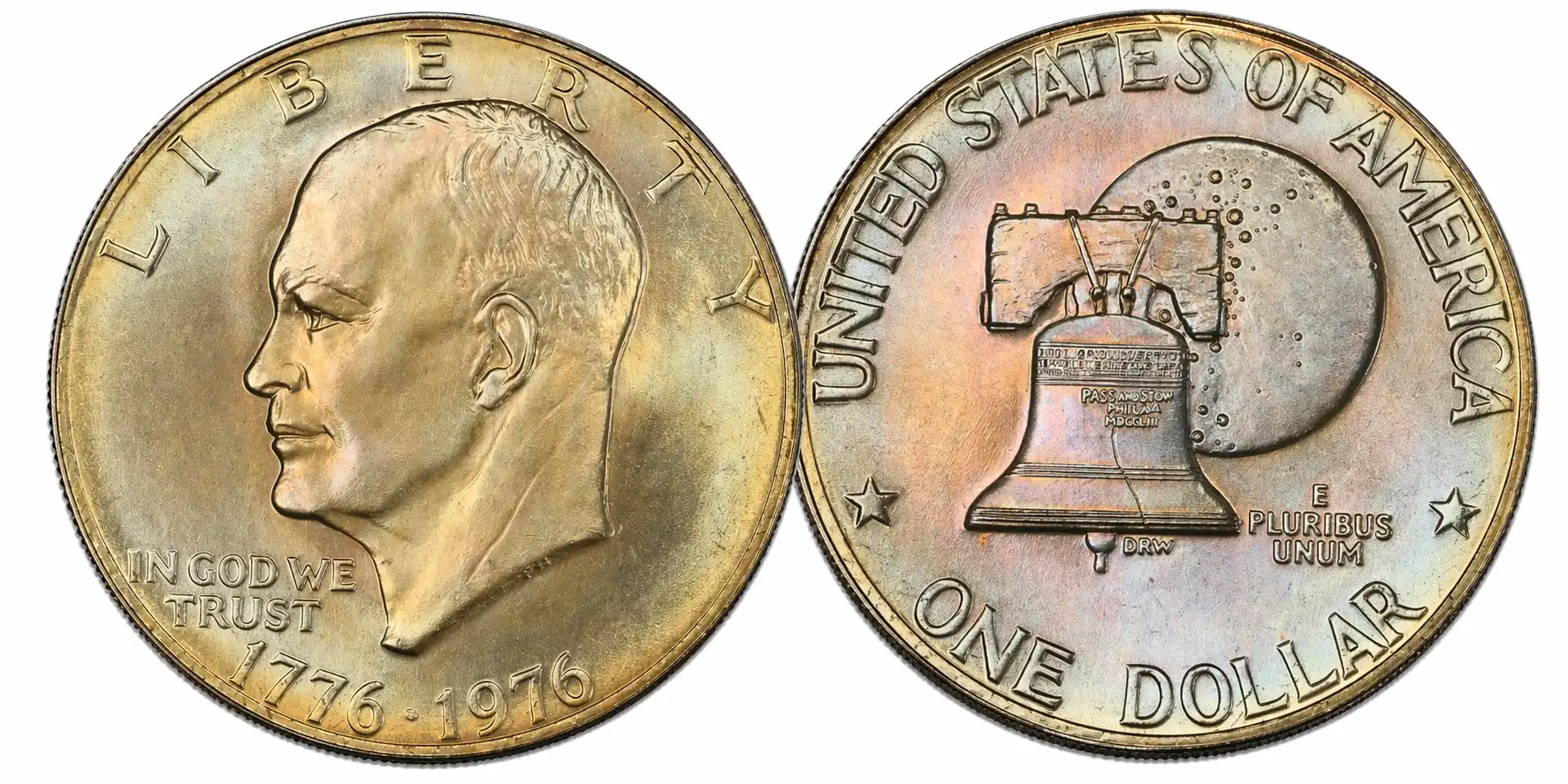
Collector demand in 2026 focuses heavily on specific versions of the Eisenhower dollar.
Bicentennial issues marking the 200th anniversary of the USA include both copper-nickel and silver editions.
The market 1976 silver dollar value depends entirely on the numeric grade assigned by labs.
Silver dollars from 1976 were never intended for general use in commerce.
US Mint authorities released these pieces exclusively in specialized sets for the collector market.
Physical traits of the silver dollar:
Material Build → 80% Silver outer layer bonded to a 20% Copper core.
Total Silver content → 40% throughout the coin.
Total Weight → 24.59 grams.
Pure Silver mass → 9.83 grams.
Minting styles → Uncirculated and Proof.
Utilizing a 40% silver mix helped lower production costs compared to the older 90% silver standards.
Hitting the 24.59-gram mark serves as a baseline for verifying authenticity during expert checks.
Visual Logic: Type I vs. Type II
Mint officials modified the lettering design on the back side during the production cycle.
Experts in 2026 draw a sharp price line between these two distinct font variations.
Font Morphology: Type I → Wide letters with blocky feet and flat relief → Mostly struck during 1975. Type II → Narrow letters with sharp, clear outlines → Struck in late 1975 and throughout 1976.
Key Identifier → Letter R in the word DOLLAR → Thick leg on Type I versus a thin, tapered leg on Type II.
Silver Type I specimens appear less frequently, which triggers a 25% price premium on average.
2026 Price Guide by Preservation Grade
Detailed below is a pricing table based on consolidated 2026 auction results.
Coin Type / State | MS65 | MS67 | MS68+ |
1976-S Silver Uncirculated | $18 | $45 | $320 |
1976-S Silver Proof (Type I) | $22 | $60 | $1,100 |
1976-S Silver Proof (Type II) | $15 | $35 | $180 |
Annual value growth for MS68 graded items sits at approximately 6.5%.
MS65 specimens show high stability, moving within just 2% of their previous year’s price.
Auction Records and Rare Sales
Extremely high scores on the 70-point scale create unique financial precedents.
Records confirm that a perfect mirror-like surface is the primary driver of value.
Recent Data Points:
1976-S Silver MS69 (Certified) → Sold for $3,200.
1976-S Silver Proof Type I PR70 (Deep Cameo) → Sold for $12,000.
Mint Error (40% Silver struck on a 1-cent blank) → Sold for $18,500.
Prices for PR70 specimens grew by 40% over the last five years due to a shrinking supply in the open market.
Investment potential remains strong for rarities held in verified plastic holders.
Production Scale and Rarity
Determining rarity requires a look at the official mintage numbers from the San Francisco Mint with the coin checker app.
Limited quantities of silver blanks were utilized for these юбилейный releases.
Distribution of Supply: → Silver Uncirculated (40% Silver) → 11,000,000 units. → Silver Proof (40% Silver) → 4,000,000 units.
Comparing these numbers → 11 million silver coins against 103 million copper-nickel coins from Philadelphia.
Being 9.3 times scarcer makes the silver version a superior choice for asset protection.
Grading Impact on Asset Value
Professional certification is an absolute requirement for achieving top-tier prices.
Having a "Deep Cameo" (DCAM) tag on Proof coins can triple the final sale amount.
Expert Evaluation Criteria:
Contrast Intensity → Frosted imagery set against a dark mirror background.
Surface Purity → Total lack of cleaning marks or contact lines.
Strike Sharpness → Fine details on the Liberty Bell on the reverse.
Trading a coin without a protective holder cuts its market liquidity by 50%.
Buyers in 2026 generally ignore listings that lack a verified numeric grade.
Rare Mint Errors: Unique Exceptions
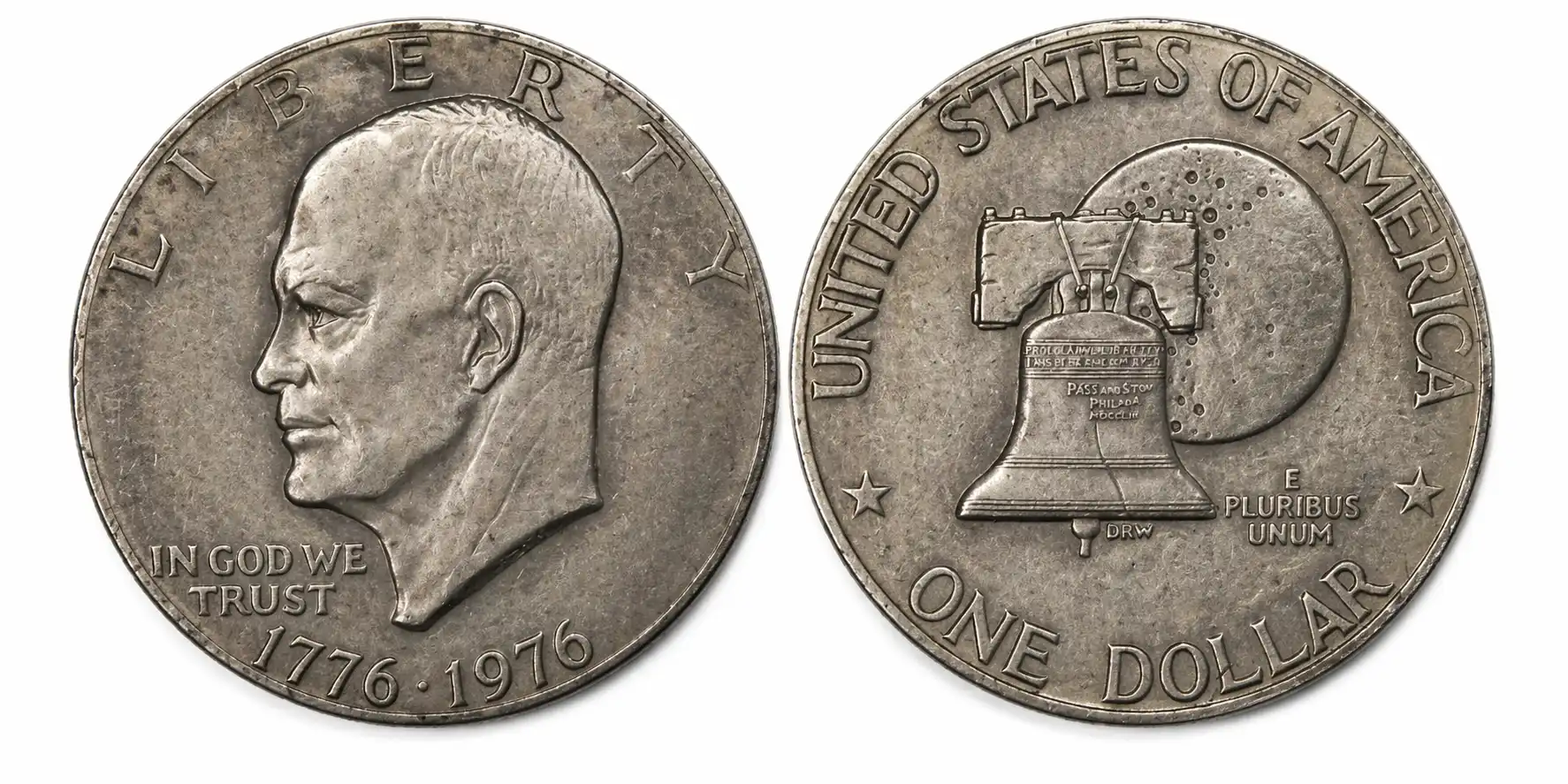
Specific 1976 dollars were struck on incorrect metal blanks by accident.
Such items represent the peak of collector demand in the current market.
Known Deviation Types: → 40% Silver dollar missing the S mint mark (Blank error). → Double Die strike with a 45-degree rotation. → Strike on a copper-nickel blank meant for standard sets.
Finding a 1976 silver dollar without an S mark on the front requires immediate metal testing.
Market value for this specific error exceeds $5,000 per unit.
Silver Content and Price Floor
Silver mass within the coin creates a fundamental price level that cannot be broken.
Having a 9.83-gram silver mass ensures the coin is always worth at least its metal value.
Melt Value Formula: 9.83 grams * current global silver price.
Current 2026 data puts this floor at approximately $12.
Collector premiums for standard sets add roughly 40% on top of the raw metal cost.
Risks of Condition Decay
Improper storage leads to the formation of "Milk Spots" on the surface.
This white contamination often occurs on 40% silver alloys during long-term storage.
Causes for Grade Drops:
Cloudy film appearance → lower visual appeal → 30% price drop.
Copper oxidation in the mix → formation of dark spots.
Micro-scratches from keeping coins in loose bags.
Hard plastic holders prevent contact with aggressive environmental factors.
Using home cleaning chemicals and checking it with the free coin value checker app strips the coin of its collector status instantly.
Demand Analysis: Type I vs Type II
Trading activity in 2026 favors the early Type I font releases.
High difficulty in finding Type I coins with perfect scores drives this preference.
Market Demand Share: → Type I (Wide Letters) → 65% of all collector inquiries. → Type II (Thin Letters) → 35% of all collector inquiries.
Cause and Effect → Shorter minting window for Type I → Market shortage → 5% faster price growth than Type II.
For 1976-S Silver Proof sets, the presence of a Type I dollar is the main price booster.
Fees and Logistics for High-End Sales
Moving a rare silver dollar into the market requires accounting for extra costs.
Selling a $1,000 lot means a seller must factor in expert review fees.
Typical Operation Costs:
Grading and insurance → $45.
Auction house commission → 15% of the hammer price.
Secure shipping → $25.
Net profit for the seller on a $1,000 deal sits at roughly $780.
Certifying coins makes economic sense only if the predicted grade is MS66 or higher.